On the afternoon of April 17, a delegation from the Undergraduate School of Central South University, led by Director Min Xiaobo, along with Deputy Directors Zou Jinfeng and Chen Guoxiong, Director of Admissions Zou Bin, and staff member Chen Cengxi, visited the School of Foreign Languages for a focused survey on undergraduate teaching, the progress of the Undergraduate Education 2.0 Initiative, and the enhancement of undergraduate training quality. The meeting was attended by Dean Yang Wendi, Associate Deans Yan Hongfu and Wang Hualing, department heads of all majors, and teaching secretaries.
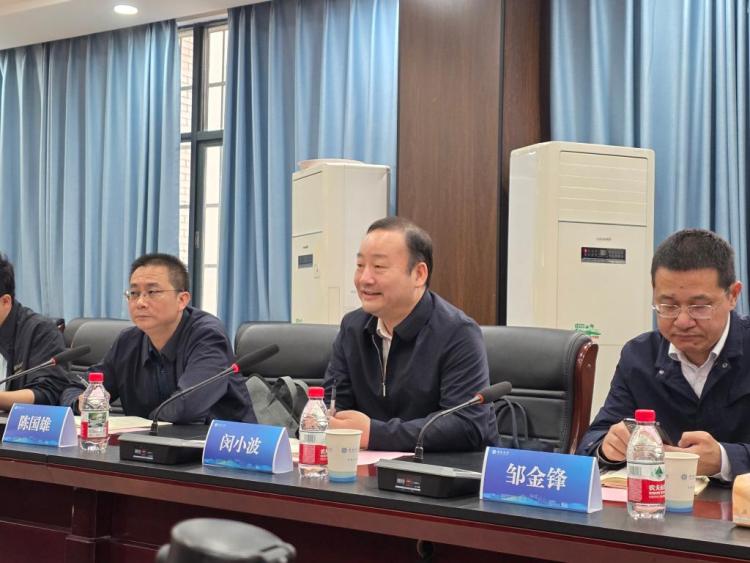
At the start of the meeting, Director Min Xiaobo outlined the background, purpose, and significance of the survey. He noted that the survey aims to gain an in-depth understanding of the School’s undergraduate teaching practices, further support teaching reforms, and continuously improve the quality of undergraduate talent cultivation.
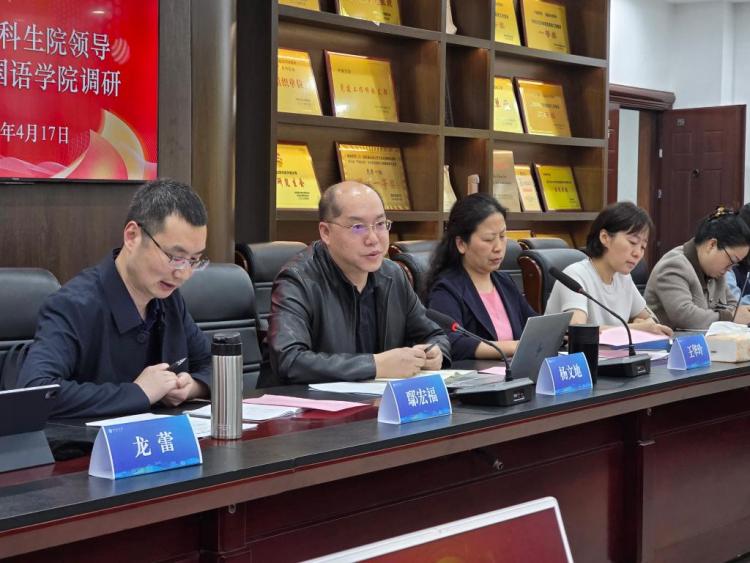
Dean Yang Wendi presented an overview of the School’s undergraduate education, highlighting the enrollment size, training models, and outcomes for majors including English, French, Japanese, and Spanish. In recent years, the School’s undergraduate employment rate has remained high, with a steady increase in the proportion of graduates pursuing further studies, reflecting a consistent improvement in talent quality. During the 15th Five-Year Plan period, the School will strengthen talent cultivation in areas such as international organizations, global communication, foreign affairs and diplomacy, and country and area studies, actively plan distinctive class models, and continuously enhance students’ global competence and overall competitiveness.
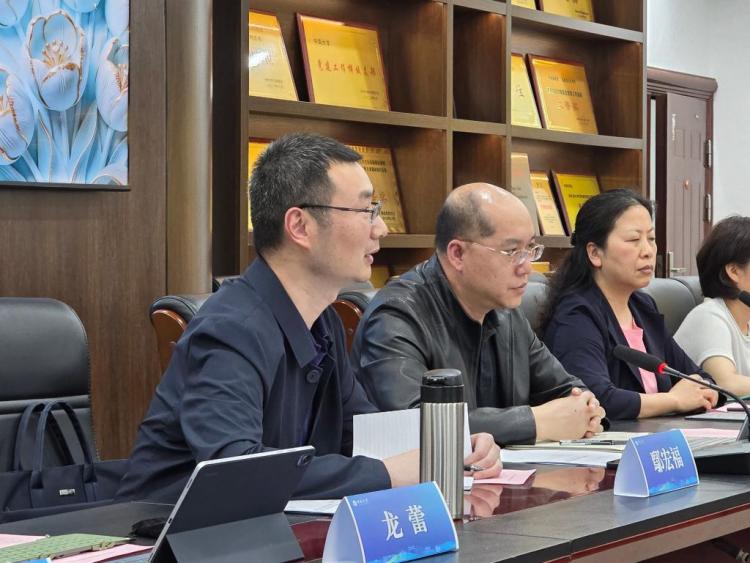
Associate Dean Yan Hongfu reported on the School’s initiatives in program building and talent cultivation in support of national strategies, regional development, and the University’s growth. He noted that the School has long leveraged its strengths in foreign language education to produce a large cohort of exceptional graduates for the nation and the region, making significant contributions to interdisciplinary training and the University’s internationalization efforts. Going forward, the School will continue to develop distinctive undergraduate programs, cultivate multilingual talent, encourage students to take cross-disciplinary courses, pilot micro-credential programs, and provide more diverse and personalized foreign language course offerings for students across the University.
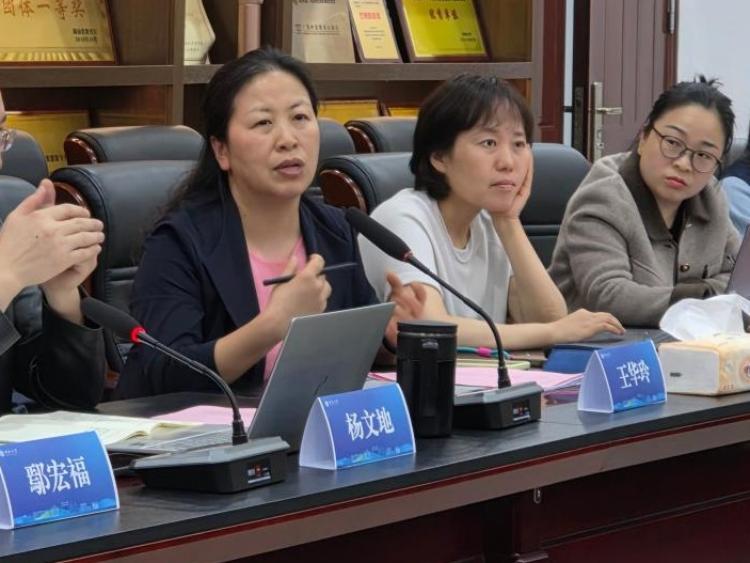
Associate Dean Wang Hualing reported on College English curriculum design, teaching reform, and differentiated instruction. She proposed improvements to the teaching evaluation system and the establishment of an early warning system for academically at-risk students. She stated that the School would work closely with the University to identify struggling students early, intervene promptly, and provide timely support, thereby improving both administrative efficiency and the quality of College English instruction. These efforts, she noted, would help ensure student success and strengthen the School's contribution to the University's 15th Five-Year Plan.
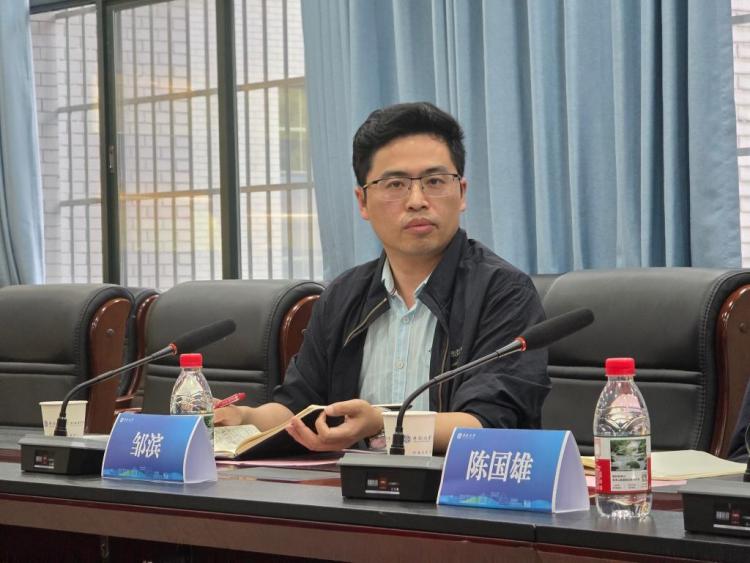
Director Zou Bin offered suggestions on marketing the School’s language programs and sharpening their distinctiveness. He stressed the need to respond proactively to shifts in the broader landscape, better define what sets each major apart, build a stronger case for the School’s track record in graduate success, and ultimately boost program appeal and attract high-caliber students through demonstrated educational outcomes.
Director Min Xiaobo commended the School for its contributions to national and regional priorities as well as the University’s mission, and for its progress in improving student quality. He urged the School to align with the University’s 15th Five-Year Plan goals, tackle challenges head-on, and deliver measurable results. He called for further efforts to refine the talent development model, adopt a quality-first approach, broaden student pathways for academic and career success, and elevate the overall quality of undergraduate education.
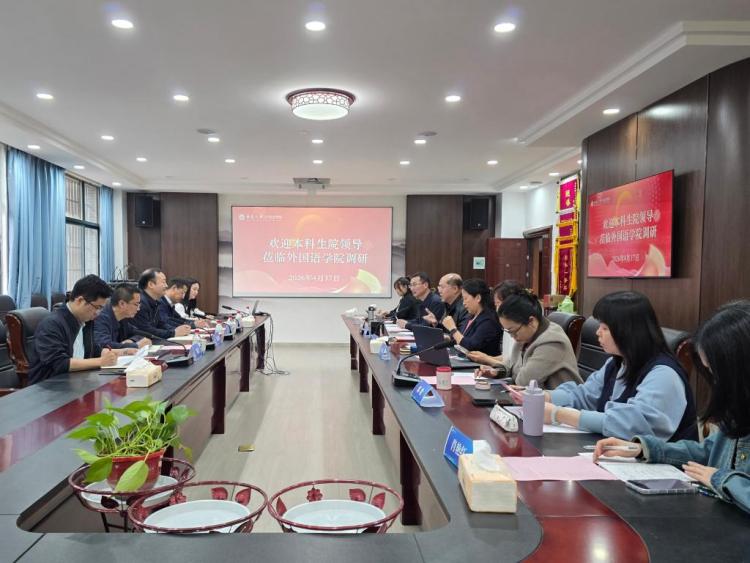
The School of Foreign Languages will seize this opportunity to turn external challenges into internal momentum, advance the University’s 15th Five-Year Plan goals, ground its reforms in institutional realities and long-term vision, and elevate the quality of undergraduate education.






 Dean's Email
 Alumni Home

 中文
中文
 Navigation
 Navigation


