School of Foreign Languages Holds 2026 Postgraduate Supervisor Conference
March 25, 2026
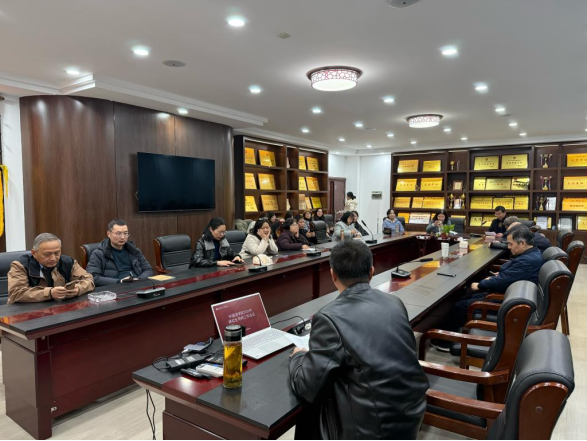
To strengthen postgraduate supervisors’ sense of responsibility, standardize training management, and enhance the quality of postgraduate education, the School of Foreign Languages held its 2026 Postgraduate Supervisor Conference on the afternoon of March 20, 2026, in Conference Room 332. The conference was chaired by Associate Dean Zhong Wenming. Attendees included Party Secretary Li Tao, Dean Yang Wendi, Deputy Party Secretary Sun Sheng, along with all supervisors, education management officers, and graduate counselors.
At the beginning of the meeting, Li Tao underscored the significant responsibilities of supervisors, noting that as the primary person responsible for postgraduate training, supervisors must strictly implement the “dual responsibility” requirement, seamlessly integrating academic instruction with mentorship. He emphasized that all supervisors should strengthen their professional ethics, keeping the fundamental mission of moral education at the forefront, and guide students in all aspects of their development. Regarding the work of supervisors, Li Tao outlined four key requirements. First, enhance ideological awareness, attach great importance to the student education and training process, and take the initiative to care deeply about students’ thoughts and growth. Second, uphold rigorous work standards by combining firmness with care, ensuring all tasks are executed thoroughly and meticulously. Third, adhere to standardized work procedures and strive for efficiency and quality. Fourth, strengthen team collaboration, integrate collective strengths, and work together to resolve challenges.
Sun Sheng focused on student safety management and developmental guidance, putting forward seven requirements for supervisors: strengthen their sense of responsibility and reinforce safety management; gain an in-depth and comprehensive understanding of students’ academic progress, career planning, and other practical circumstances; establish regular communication mechanisms, such as holding regular group meetings and building peer support systems; enhance daily management to stay informed of students' circumstances and proactively help students address their difficulties; build a healthy supervisor-student relationship, balancing mentorship with friendship; identify and address risks such as telecom fraud and traffic safety, raising students' awareness of prevention; and adopt appropriate approaches in student interactions while maintaining regular communication with and reporting promptly to the School.
Zhong Wenming focused on student mental health, providing a detailed overview of the current state and characteristics of mental health issues among graduate students. He analyzed the multidimensional factors contributing to stress, emphasizing the need for accurate understanding and proper guidance. Zhong also pointed out that building an equal, respectful, and mutually supportive supervisor-student relationship is a fundamental condition for effective postgraduate management work. He stressed that supervisors should be mindful of their feedback methods, implement differentiated training approaches, and remain well-versed in postgraduate training procedures, clearly understanding their roles and responsibilities while continuously improving professional capabilities.
Finally, Dean Yang Wendi concluded that all supervisors must place great emphasis on students’ physical and mental health, keep track of students' daily lives, strengthen psychological education, hold regular group meetings, adhere to individualized instruction, and contribute to students’ growth and development, thereby supporting the School’s disciplinary development and talent cultivation efforts.
This meeting further clarified the responsibilities of supervisors and fostered a shared understanding of postgraduate training, laying the groundwork for the orderly advancement of the School’s future initiatives and proving significant in promoting the high-quality development of the School’s postgraduate education.






 Dean's Email
 Alumni Home

 中文
中文
 Navigation
 Navigation


