From June 13 to 19, the Central South University-Middlebury Institute of International Studies at Monterey (MIIS) international collaborative course was held at our School. The course, titled “Understanding Contemporary China: Advanced Chinese-English Translation,” was delivered by Professor Cai Lijian of MIIS. Participants included faculty members from our School’s translation studies team, young instructors, MTI students, and some senior undergraduates.
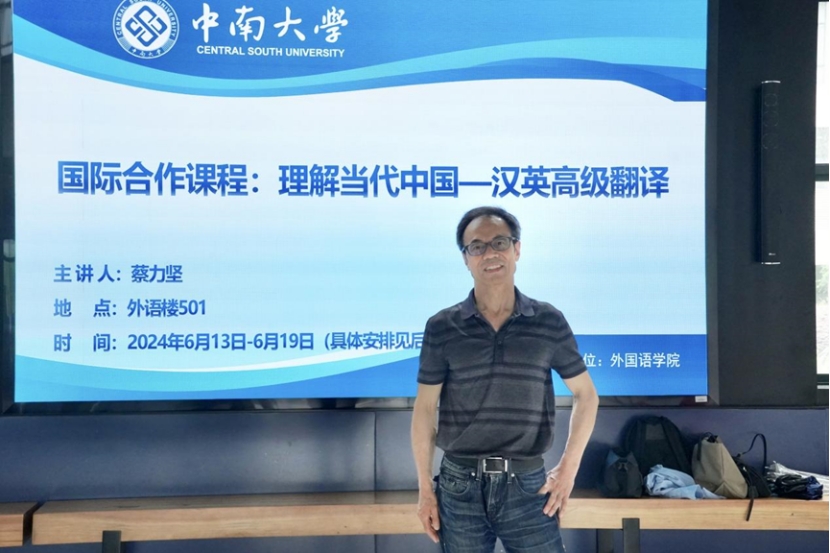
Professor Cai Lijian graduated from the United Nations Translator Training Program at Beijing Foreign Studies University. He served as a translator at China’s Permanent Mission to the United Nations at Geneva and as Third Secretary in the Department of International Organizations and Conferences of the Ministry of Foreign Affairs of the PRC. From 1989 to 2015, he worked at the United Nations Secretariat as a translator, editor, reviser, and senior reviser. Since 2016, he has taught at MIIS and served as a member of the Expert Committee of the China Public Policy Translation Institute and as a final English reviewer for major projects such as the Keywords to Understand China series and Understanding China in the New Era. He has published extensively in Chinese Translators Journal and authored influential works including English Translation of Contemporary Political Discourse: Building the Cornerstone of Chinese Narrative, Twenty Lectures on Chinese-English Translation, and A Casebook in Document Translation.
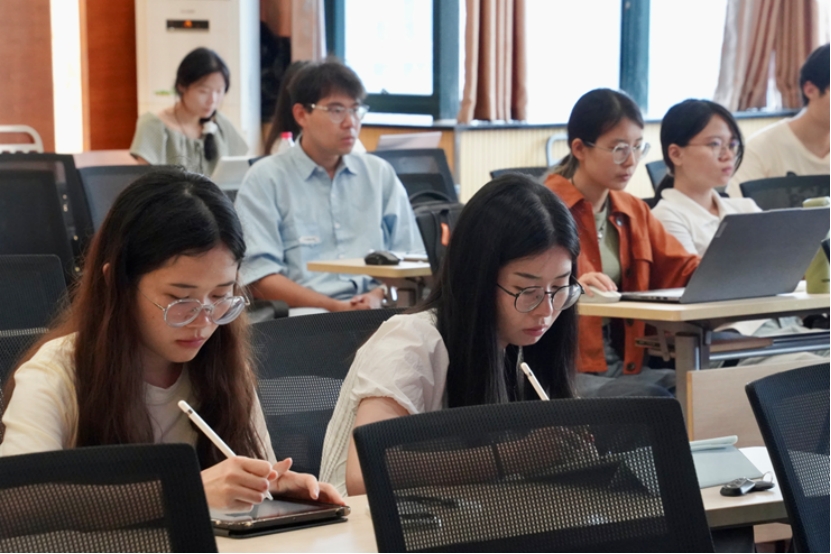
The course comprised five modules: 1) Professional Ethics and Skills for Translators; 2) Challenges and Strategies in Understanding and Translating China; 3) Translation Technology: Refinement and Application; 4) Strategies and Practices in News Translation; and 5) Enhancing English Translation of Contemporary Political Discourse. Through detailed analysis of extensive examples, Professor Cai illuminated the principles of translating Chinese discourse into English, demonstrated the techniques of advanced Chinese-English translation, and explored how to leverage AI and large language model (LLM) as tools. Examples drawn from politics, economics, journalism, and public communication were used to compare translations from various sources, translators, and machine-generated outputs. Students gained profound insights: translation is not a game of finding “equivalents”, which exist only in dictionaries, while meaning is dynamically generated by context and may even undergo generalization or abstraction. Rather than mechanically following “standard translations,” one must deeply grasp the original meaning, uncover its underlying logic, and reconstruct it in the translation. Significant differences exist between Chinese and English in rhetorical tendencies, stylistic preferences, and audience expectations. LLMs trained on different corpora naturally reflect these differences in text generation, producing results of varying quality. Using comparative examples of ChatGPT and human translation, Professor Cai demonstrated that genre constraints on AI text processing may be less pronounced than commonly assumed. AI-generated literary translations are not invariably low-quality, nor are its outputs for highly regulated texts like official documents and news consistently superior—outcomes depend largely on the interpretation and reconstruction of the original meaning and logic. Technological advances provide language professionals with powerful tools, but also raise the bar: they demand precise judgment to evaluate accuracy, refined critical discernment to assess quality, and the ability to guide and refine the output.
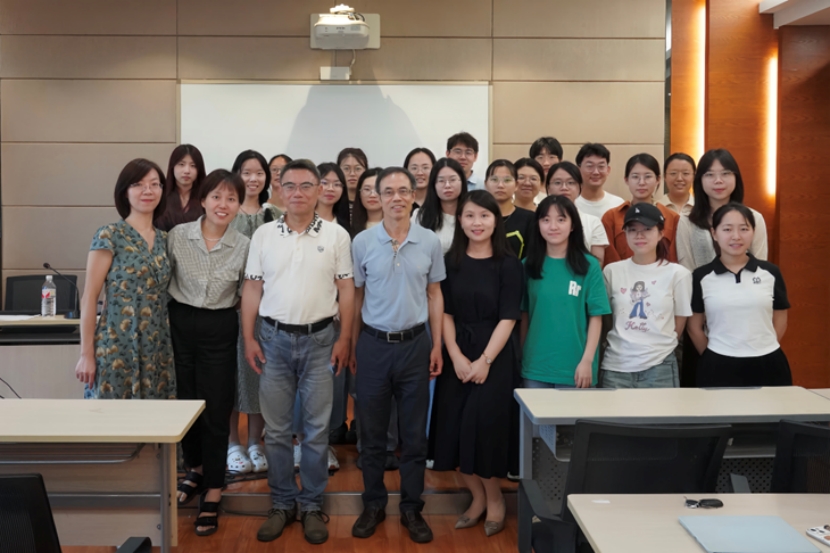
In addition, each module required students to complete translation exercises, which Professor Cai reviewed individually with meticulous feedback and revisions. Faculty and students who participated gained a renewed understanding of the “principles,” “techniques,” and “tools” of advanced Chinese-English translation. These insights will inform their translation practice and teaching, as they explore new pathways to enhance the influence of Chinese discourse in the international arena.
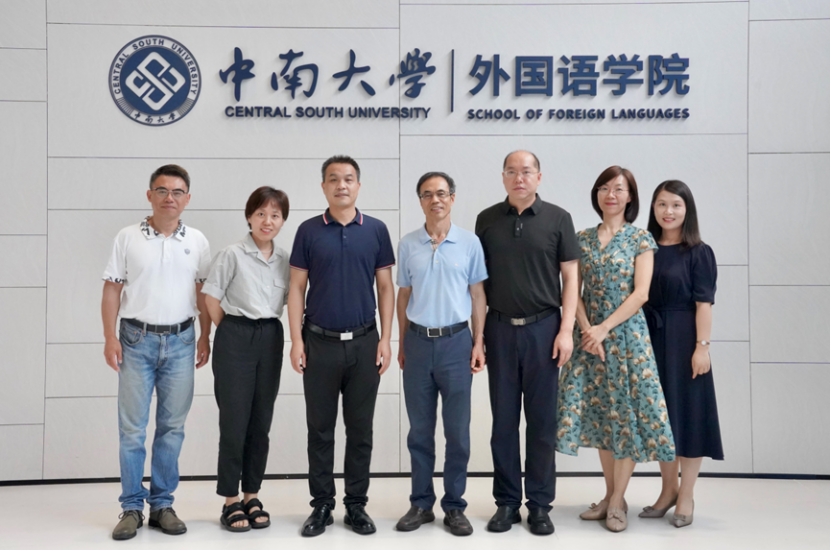
This course serves as a springboard for our School to deepen collaboration with MIIS and other internationally renowned translation institutions, further internationalizing our graduate programs and broadening the global perspectives and research competencies of graduate students.




 Dean's Email
 Alumni Home

 中文
中文
 Navigation
 Navigation


